

It took me four years to pay off $35,000 in credit card debt. I want to lead with that number because most articles like this present an 18-month triumph and pretend the writer never had a car break down. My timeline included two setbacks — one medical, one a transmission — that each added six months. If your timeline is also four years, you are not behind. You’re average. “Fast,” when most credit card APRs are high, mostly means “faster than the minimum payment will get you there,” which for a $10K balance is over a decade.
This is a five-step playbook for getting out of credit card debt at a pace that’s realistic for someone with a normal income and a normal life. It’s not a guru course and there’s no secret method. The math is just math; what varies is how you apply it.
What you’ll need
Information:
- A complete list of every credit card balance you carry, with current APR and minimum payment
- Your most recent credit score (free from any major credit bureau or app)
- Last three months of bank statements — you’ll need them for step 4
Tools:
- A spreadsheet (or paper — I used paper for the first year)
- Calendar reminders for payment dates
- One coffee or whatever quiet hour you need to sit with the numbers
Prerequisites:
- A willingness to look at the total balance without flinching too long. The number doesn’t get smaller by being ignored — that part you already know.
Before you start
Two things to flag up front. First, the emergency fund tension: standard advice says to save $1,000 before throwing money at debt. The reason is that without any cushion, the first car repair or vet bill goes back onto a credit card, and you spiral. That’s not theoretical — that’s what my second setback was. Have at least a few hundred dollars set aside before you start aggressively paying down debt, even if it slows the payoff slightly.
Second, the minimum-payment trap. Credit card minimums are designed to keep you in debt — they’re typically calculated as a small percentage of your balance plus interest, which means a typical balance, paid at minimum only, takes many years to clear and costs you a large amount in interest. Every step in this guide is about escaping that math.
Step 1: List everything
Open a spreadsheet (or a page) and write four columns: card name, current balance, APR, minimum payment. Pull each number from your last statement or the issuer’s app. Don’t estimate. The point of this step is to make the abstract “credit card debt” feel like a list of specific, addressable accounts, because that’s what it is.
Add a fifth column: total interest paid in the last 12 months. Most issuers show this on the December statement or in the year-end summary. This is the number that will motivate the work that follows. Seeing that you paid $1,800 in interest last year to one card is a useful kind of mad.
Step 2: Pick a payoff strategy that matches you
There are two main strategies, and both work. The difference is what kind of person you are.
Avalanche orders cards by APR, highest first. You pay minimums on everything and throw all extra money at the highest-APR card until it’s gone, then move down. This minimizes total interest paid — it is mathematically optimal. The downside: if your highest-APR card also has the biggest balance, you’ll feel like you’re making no progress for months.
Snowball orders cards by balance, smallest first. Same idea — minimums on everything, extras to the smallest balance — but you get a card paid off (and removed from the list) faster. The downside: you pay more interest overall. The upside: people on the snowball method finish payoffs at higher rates because the momentum is real.
I used avalanche because the math person in me couldn’t stand the inefficiency of snowball. Some people would have given up using avalanche and stuck with snowball. There’s no right answer here, only the answer you’ll actually execute.
What happens to your credit score during payoff
Here’s something most articles skip: your credit score often improves as you pay down debt, and understanding why helps you stay motivated through the middle months.
Your credit score is built on several factors, and two of them move in your favor as you pay off cards. First, credit utilization — the percentage of your available credit you’re currently using. If you have $10,000 in total credit limits and you’re carrying $7,000 in balances, your utilization is 70%. High utilization (generally above 30%) hurts your score; bringing it down helps. As you pay down balances, utilization drops, and your score rises.
Second, payment history — the record of on-time payments. Every month you pay on time during your payoff builds this history. Payment history is the largest single factor in your score, so consistent on-time payments during a multi-year payoff are building credit even as you’re reducing debt.
The practical takeaway: you’re not just eliminating interest charges. You’re repairing or building a credit profile that will help you qualify for better rates on future loans — car, mortgage, refinance — which saves you money for years after the cards are paid off.
Step 3: Lower the interest rate

The fastest way to pay off debt isn’t earning more — it’s paying less interest. Three options, listed from easiest to most involved.
Balance transfer card. If your credit score is around 670 or higher, you can usually qualify for a card offering 0% APR for 15–21 months on transferred balances. There’s typically a transfer fee of 3–5% of the balance. The math: a $5,000 balance at a typical high APR costs over $1,000 a year in interest; a 3% transfer fee is $150 one-time. If you can pay off the balance during the 0% period, you save roughly $1,000. If you can’t, you transfer to a card at the same or higher APR and end up worse off. Use this only if you have a real plan to pay it down before the promo ends.
Personal consolidation loan. A personal loan from a bank, credit union, or online lender can consolidate multiple cards into one fixed-payment loan, often at a lower APR than your cards carry. Credit unions often offer the best rates if you’re a member. Watch for origination fees and prepayment penalties.
Nonprofit credit counseling. A NFCC-member credit counseling agency can set up a Debt Management Plan (DMP) — they negotiate with your creditors to reduce interest rates in exchange for a fixed monthly payment over 3–5 years. This is genuinely free or low-fee counseling, not the for-profit “debt settlement” services that damage your credit. The NFCC site has a member directory.
Hardship programs. If you’ve lost income or had a major expense that temporarily makes your current payments unmanageable, call your creditors before you miss a payment. Many issuers offer hardship programs — temporary interest rate reductions, paused payments, or modified minimums — for customers who call proactively. These programs aren’t advertised, but they exist, and they’re far better for your credit than missed payments followed by collections calls.
Avoid for-profit debt settlement. It works by stopping payment to creditors to force a lump-sum negotiation, which trashes your credit for seven years. Worse, forgiven debt is often reported to the IRS on a 1099-C as taxable income — you can end up owing taxes on “income” you never actually received. IRS Publication 908 covers the tax treatment of discharged debt; in most bankruptcy cases this income can be excluded, but in settlement arrangements it often can’t. This is one reason nonprofit credit counseling (which doesn’t involve settled/forgiven debt) is the safer route.
Best Budgeting Method for Beginners in 2026 pairs naturally with this step — once the interest is lower, the budget is what keeps the payoff on track.
Step 4: Find an extra monthly payment
The other lever is more money toward debt each month. Three places it usually comes from:
Subscriptions and recurring charges. Pull three months of bank and card statements and list every recurring charge. Most people find a meaningful amount of monthly charges for things they forgot they were paying for. This isn’t about deprivation — if you actually use Spotify and Netflix, keep them. It’s about the gym you stopped going to in February.
Negotiating bills. Internet, phone, and insurance are negotiable. Call once a year, ask for a retention deal, mention competitors’ rates. I knocked $35/month off my internet bill in a 15-minute call. Over a year that’s $420 directed to debt.
Side income. Even a few hundred dollars a month dedicated entirely to debt accelerates payoff dramatically. A $5,000 balance at a high APR with a typical minimum payment takes many years; adding $200 more per month can cut that to around 18 months. How to Start a Side Hustle With No Money: 7 Real Options covers options that don’t require upfront investment — important when you’re already paying down debt.
The temptation to celebrate by spending the new income is real. The whole point of the plan is that the side money goes to debt — not gradually, automatically.
Realistic payoff timelines: worked examples
Here’s what the math actually looks like, so you can benchmark whether your plan is on track:
Example 1: $5,000 balance at 22% APR
- Minimum payment only (~$125/month): 62 months, $2,680 in interest
- Minimum + $100 extra ($225/month): 27 months, $1,020 in interest
- Minimum + $200 extra ($325/month): 18 months, $660 in interest
Example 2: $10,000 balance at 20% APR
- Minimum payment only (~$200/month): 94 months, $8,620 in interest
- Minimum + $200 extra ($400/month): 32 months, $2,730 in interest
- Minimum + $400 extra ($600/month): 20 months, $1,640 in interest
These timelines assume you stop using the card entirely — every new charge resets the math. The point isn’t to make you feel bad if your numbers don’t match; it’s to show the relationship between extra payment and payoff speed. Even a modest increase in monthly payment cuts years off the timeline and thousands off the interest.
If you’re paying aggressively and your balance isn’t dropping as fast as these examples suggest, check two things: new charges you’ve added (the most common slip), or an APR increase (issuers sometimes raise rates if you miss a payment on any account, even one not with them). Adjust the plan; don’t quit it.
Step 5: Automate everything
Set up autopay on every card for at least the minimum on the due date. This eliminates the risk of a missed payment (late fees and credit score damage) which is the single most common way debt-payoff plans get derailed.
Then automate the extra payments. If you’re paying $200 extra per month to your target card, set that as a scheduled transfer two days after payday. Money that hits a checking account tends to find expenses to fill it; money that auto-routes to debt before you see it gets paid off.
Verify it worked
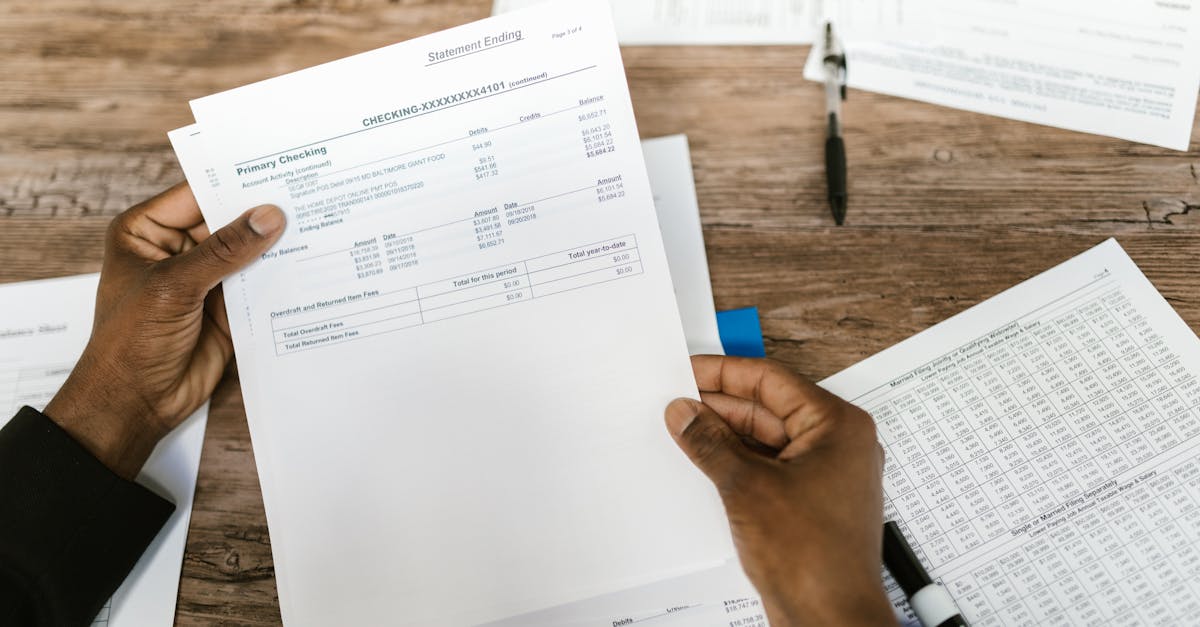
Check the balance and the APR on your target card monthly. The balance should be falling at the expected pace based on the examples above. If it’s not, look for two things: any new charges you’ve added (the most common slip), or an APR change. Adjust the plan; don’t quit it.
Celebrate the first card paid off in some small concrete way — not by adding new debt. I framed the first statement showing a zero balance.
Troubleshooting
Problem: A medical or car emergency added new debt. This happened to me twice. The fix is not despair — it’s pause, top up the emergency fund first, then resume. You’ll add months to the timeline, not years.
Problem: The balance keeps going up despite making payments. You’re using the cards faster than you’re paying them. Either you need to remove the cards from auto-saved payment methods on shopping sites, or there’s an income/expenses mismatch that no payoff method can solve. If it’s the latter, the NFCC counseling directory is a good starting point — they’ll help you figure out whether a debt management plan or a different approach makes sense.
Problem: Lost my job mid-payoff. Call every creditor immediately. Many offer hardship programs that lower interest or pause payments temporarily — but only if you call before missing payments, not after. Document the job loss (termination letter, unemployment claim) because some creditors ask for proof before enrolling you.
When to talk to a professional
Talk to an NFCC-member credit counselor (free or very low cost) if your debt-to-income ratio is uncomfortable, if you’re juggling more than three cards, or if you’ve already missed payments. They will look at the whole picture without selling you anything.
Talk to a bankruptcy attorney — most offer free consultations — if your minimum payments now exceed your disposable income, if you’ve been sued by a creditor, or if your debt is more than half your annual income. Bankruptcy isn’t the failure people fear it is; for some situations it’s the right reset. An attorney can tell you whether your situation qualifies. And if debt is discharged through bankruptcy or settlement, understand the tax treatment — IRS Publication 908 explains when discharged debt becomes taxable income and when it doesn’t. In most Chapter 7 or Chapter 13 bankruptcies, you won’t owe tax on the discharged amount, but settlement arrangements can trigger a 1099-C.
Should I close credit cards after paying them off?
Usually not. Closing a card reduces your total available credit (which raises your credit utilization ratio and lowers your score) and shortens average account age (also lowers score). Keep the cards open with the balances at zero and use one for a small recurring charge (a subscription) paid in full monthly to keep it active.
Is the avalanche or snowball method actually better?
For pure math, avalanche. For people-actually-finishing-the-plan, the answer depends on you. If saving interest matters more than feeling momentum, avalanche. If feeling momentum matters more, snowball. Both work. The wrong choice is whichever one you don’t execute.
What’s a realistic payoff timeline for $10K of credit card debt?
With minimum payments only, many years. With a balance transfer card and aggressive payoff, 12–18 months. Without a balance transfer but several hundred dollars a month extra applied, around 30–36 months at typical APRs. “Fast” usually means 2–4 years for typical balances, assuming normal income and the occasional setback.
Will paying off debt hurt my credit score?
Briefly, possibly. The score can dip slightly when a balance closes, but recovers as utilization improves. Long-term, paid-off debt is unambiguously good for your score.
Not financial advice. This article is a summary of general personal-finance information. Your situation is specific to you; for tailored advice consult a NFCC-member credit counselor or, where appropriate, a bankruptcy attorney.
For the budgeting framework that supports any of these payoff strategies, more on best budgeting method for beginners in 2026 walks through the main options. And if the side-income piece is where your plan needs reinforcement, more on how to start a side hustle with no money: 7 real options covers low-startup-cost options that can fund the extra payment without requiring you to buy gear first.