

In November 2021, a friend put $5,000 into five cryptocurrencies—$1,000 each into Bitcoin, Ethereum, Solana, Cardano, and Polygon. She thought spreading across five coins meant diversification. Thirteen months later, her portfolio was worth $1,800. Every coin had fallen 60-85%. She called me and asked, “Wasn’t diversification supposed to protect me?”
It does—but not the way she thought.
The short answer
Cryptocurrency portfolio diversification means spreading investment across multiple digital assets to reduce single-coin failure risk. The catch: during crashes, most cryptocurrencies fall together. Diversification within crypto might reduce losses by 5-10% compared to holding one coin, but it won’t prevent catastrophic drawdowns. Real diversification means limiting crypto to 1-5% of a broader portfolio that includes stocks, bonds, and other asset classes.
Why crypto diversification works differently
Traditional diversification works because different asset classes don’t move in lockstep. When stocks fall, bonds might hold steady. When real estate slumps, commodities might gain. Low correlation is what makes diversification effective.
Cryptocurrency seemed like it should follow the same principle. Bitcoin, Ethereum, DeFi tokens, layer-2 protocols—each serves different purposes, runs on different technology. In theory, they shouldn’t all crash together.
In practice, they mostly do. During the 2022 bear market, correlation between Bitcoin and most major altcoins exceeded 0.85, meaning they moved together 85% of the time. When Bitcoin fell, Ethereum fell nearly as hard, and smaller altcoins fell harder. Holding ten different cryptocurrencies might have saved you 5-10% compared to holding only Bitcoin, but it didn’t prevent severe losses.
The reason: cryptocurrencies trade as a single asset class. When institutional money flows in, most coins rise. When investors panic or regulators tighten rules, nearly everything falls. Correlation occasionally breaks during bull markets—some DeFi token surges while Bitcoin drifts—but during crashes, crypto moves as one block.
This doesn’t mean diversification within crypto is pointless. It means you need realistic expectations about what it can and can’t do.
Portfolio construction frameworks
If you’re allocating money to cryptocurrency, here are three frameworks based on different risk tolerances. These are starting points, not prescriptions—adjust based on your timeline, loss tolerance, and overall financial situation.
| Allocation | Bitcoin | Ethereum | Alternatives | Stablecoins | Best for |
|---|---|---|---|---|---|
| Conservative | 60% | 25% | 5% | 10% | Beginners, low risk tolerance |
| Moderate | 45% | 35% | 15% | 5% | Some experience, medium risk |
| Growth-oriented | 35% | 40% | 25% | 0% | Experienced, high risk tolerance |
Why these frameworks work
Bitcoin has the longest track record (launched 2009), deepest liquidity, and clearest regulatory status. The IRS treats it as property, meaning gains are taxed as capital gains and losses can offset other investment gains. Ethereum has the second-longest track record and the most developed ecosystem for smart contracts and decentralized applications.
Stablecoins deserve their own allocation tier because they move with the U.S. dollar, not with crypto. A stablecoin pegged to $1.00 doesn’t provide crypto diversification—it provides an exit ramp. The conservative allocation includes 10% stablecoins as dry powder for buying during crashes or as a temporary safe haven. The moderate allocation includes 5% for opportunistic buys. The growth-oriented allocation skips stablecoins entirely because you’re betting on crypto appreciation, not dollar stability.
Alternatives include layer-2 protocols, DeFi tokens, and newer projects with real adoption. In the conservative allocation, the 5% alternative slot lets you experiment without risking core holdings. In the moderate allocation, you’re shifting weight toward Ethereum and alternatives because you believe technology beyond Bitcoin will drive long-term value. In the growth-oriented allocation, you’re making a concentrated bet that newer projects will outperform.
Critical caveat: These allocations assume crypto is already a small part of your broader portfolio. If you have $50,000 invested and $2,500 in crypto (5%), losing 65% costs you $1,625—painful but not catastrophic. If crypto is your entire portfolio, even the conservative allocation carries extreme risk. The SEC’s Office of Investor Education warns that digital asset investments can be highly speculative and may result in total loss.
Selection criteria for a beginner portfolio
When deciding which cryptocurrencies belong in your portfolio, use these filters. They won’t eliminate risk—nothing does in crypto—but they reduce the chance you’re holding a coin that collapses to zero.
Market capitalization threshold
Only consider coins with at least $1 billion market cap for core holdings (Bitcoin and Ethereum both exceed $500 billion as of October 2024). For alternatives, set a $100 million floor. Projects under $100 million have high delisting risk, low liquidity, and often disappear during bear markets. You can find current market caps on CoinMarketCap or CoinGecko.
Liquidity check
Can you exit your position quickly without moving the price? Look at 24-hour trading volume—it should be at least 5-10% of market cap. If a coin has a $200 million market cap but only $2 million in daily volume, you’ll struggle to sell without taking a significant haircut.
Regulatory clarity
Bitcoin and Ethereum have the clearest regulatory status in the United States. Newer tokens face ongoing uncertainty—some may be classified as securities, restricting how they can be traded and sold. FINRA’s investor resources note that many digital assets lack the regulatory protections that apply to traditional securities.
This doesn’t mean avoid all newer tokens. It means understand you’re taking regulatory risk on top of market risk.
Use case and adoption
Does the project solve a problem people actually pay to solve? Ethereum hosts thousands of decentralized applications; people pay gas fees to use them. Stablecoins facilitate cross-border payments and DeFi lending; billions of dollars flow through them daily. Some layer-2 protocols reduce Ethereum’s transaction costs; users are migrating to them in measurable numbers.
Compare this to projects with whitepapers full of promises but no users, no revenue, and no clear path to either. Those are speculative bets, not portfolio anchors.
The tax cost of rebalancing
Here’s what the beginner guides don’t tell you: maintaining your target allocations generates taxable events that can significantly reduce your returns.
Every rebalancing trade triggers capital gains or losses that must be reported to the IRS on Form 8949 (Sales and Other Dispositions of Capital Assets). If you rebalance quarterly and hold five cryptocurrencies, that’s potentially 20+ taxable events per year to track, report, and pay taxes on.
The mechanics: You bought Bitcoin at $30,000. Six months later, Bitcoin hits $50,000 and now represents 65% of your portfolio instead of your target 50%. You sell $5,000 of Bitcoin to rebalance. You owe capital gains tax on the $20,000 gain embedded in that $5,000 sale. If you held for less than a year, that’s taxed as ordinary income—potentially 22-37% federal rate depending on your bracket, plus state taxes.
This is on top of the market risk. Even if your rebalancing discipline improves returns over time, the tax drag can erase 20-40% of that benefit if you’re rebalancing frequently in a taxable account.
Two ways to reduce this cost:
-
Rebalance with new money. Instead of selling overweight positions, add new contributions to underweight positions. You achieve the same allocation shift without triggering sales.
-
Use wider rebalancing thresholds. Instead of rebalancing quarterly, rebalance only when allocations drift more than 15 percentage points from target. Fewer rebalances mean fewer taxable events.
The tax reporting burden is real. If you make more than a handful of trades per year, you’ll need crypto tax software (CoinTracker, Koinly, TaxBit) or a very detailed spreadsheet. The IRS requires cost basis and holding period for every sale. If you can’t produce documentation, the IRS may assume zero cost basis—meaning your entire sale proceeds get taxed as gains.
This isn’t a reason to skip diversification. It’s a reason to build tax costs into your rebalancing strategy from day one.
How correlation actually behaved in 2022
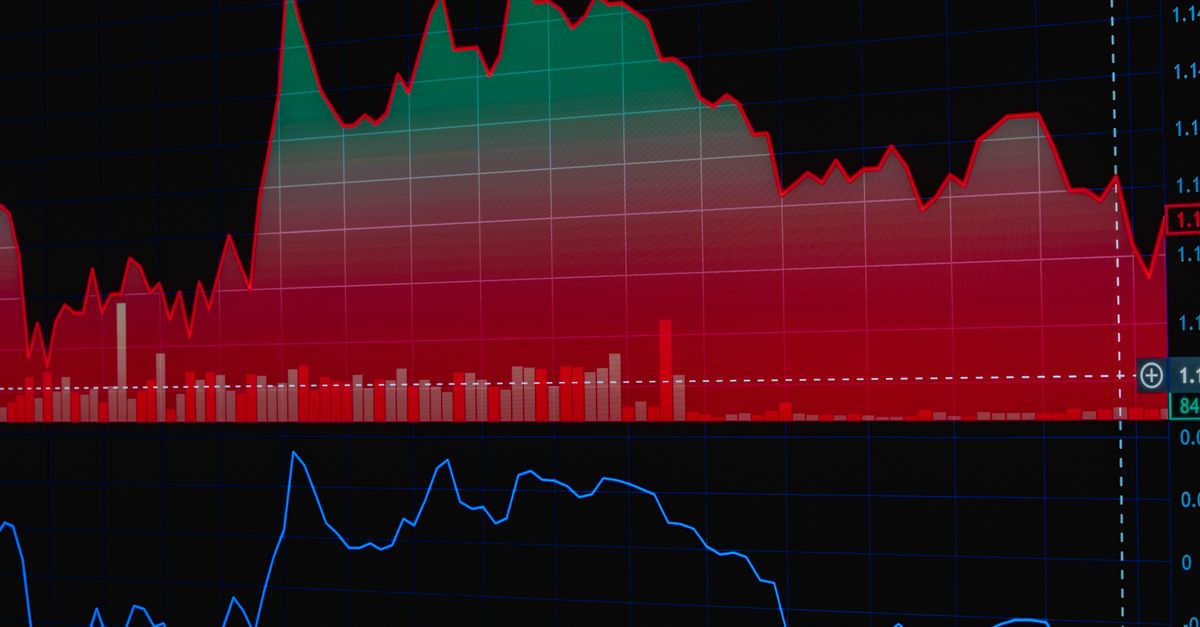
The claim that “diversification provides 5-10% protection” comes from actual bear market performance data. From November 2021 to December 2022:
- Bitcoin fell approximately 64%
- Ethereum fell approximately 67%
- Solana fell approximately 94%
- Cardano fell approximately 80%
- Polygon fell approximately 82%
A portfolio split equally among these five coins would have fallen roughly 77%—about 13 percentage points worse than holding Bitcoin alone. The “diversification” into smaller altcoins actually increased losses rather than reducing them.
The 5-10% protection estimate applies when you diversify conservatively—60% Bitcoin, 25% Ethereum, 15% alternatives. That allocation would have fallen roughly 69% during the same period, about 5 percentage points better than a pure Ethereum position but 5 percentage points worse than pure Bitcoin.
The lesson: diversification within crypto during a bear market is about reducing single-coin risk (avoiding the -94% Solana outcome), not about preventing losses. Correlation between Bitcoin and Ethereum during the 2022 crash exceeded 0.90. They moved together. Diversification smoothed out the extremes—it didn’t provide downside protection.
Sizing relative to your overall net worth
For most beginners, crypto should be 1-5% of your total investment portfolio. If you have $20,000 invested across retirement accounts, a brokerage account, and emergency savings, that means $200-$1,000 in crypto. Experienced investors with higher risk tolerance might go to 10-20%, but only if they can afford to lose that money without derailing financial goals.
Why so small? Because a 65% drawdown—which has happened multiple times in Bitcoin’s history—turns $10,000 into $3,500. If that $10,000 represented 50% of your portfolio, you just lost 32.5% of your net worth in a single asset class. If it was 5% of your portfolio, you lost 3.25%—painful, but recoverable.
Set a hard dollar limit before you start. Not “I’ll invest until it feels like too much.” Not “I’ll see how it goes.” Decide the maximum dollar amount you’re willing to lose completely, then invest that. When crypto surges and your 5% allocation grows to 12%, rebalance back down. Don’t let a winning position talk you into overexposure.
What it means for your portfolio

If you’re building a cryptocurrency portfolio as a beginner, here’s the practical workflow:
-
Decide your total crypto allocation. Start with 1-5% of your investment portfolio. Not 1-5% of your net worth—1-5% of the money you have actively invested.
-
Choose your allocation framework. Conservative (60/25/5/10), moderate (45/35/15/5), or growth (35/40/25/0). Write it down.
-
Select your coins using the criteria above. Market cap over $1B for core, $100M for alternatives. Liquidity check. Regulatory clarity. Real use case.
-
Set up custody. If you’re investing less than $5,000, a reputable exchange (Coinbase, Kraken, Gemini) is fine. If you’re investing more than $20,000, research hardware wallets for self-custody. Understand the trade-off: exchanges carry counterparty risk (they can freeze withdrawals, go bankrupt, or get hacked), but hardware wallets require you to manage private keys—if you lose them, your crypto is gone forever.
-
Set a rebalancing rule that accounts for taxes. Quarterly rebalancing with 10% thresholds, or threshold-based with 15% bands. Put it on your calendar. Prioritize rebalancing with new contributions before triggering sales.
-
Track cost basis from day one. Use crypto tax software (CoinTracker, Koinly, TaxBit) or a meticulous spreadsheet. Every trade is a taxable event. Every staking reward is ordinary income. IRS Publication 550 covers the reporting requirements in detail.
-
Review annually. Has your risk tolerance changed? Has your financial situation improved or worsened? Should crypto be a smaller or larger part of your portfolio? Don’t set it and forget it.
FAQ
How much of my portfolio should be cryptocurrency?
For most beginners, 1-5% as a speculative allocation. Crypto is far more volatile than stocks or bonds—30-50% drawdowns in a single quarter are normal. Only allocate money you can afford to lose without derailing your financial goals. Experienced investors with higher risk tolerance might go to 10-20%, but anything above that means crypto dominates your portfolio, which is extremely risky.
What are the safest cryptocurrencies?
“Safe” is relative in this asset class. Bitcoin and Ethereum have the longest track records, deepest liquidity, and clearest regulatory treatment. They’ve survived multiple 50%+ crashes and still exist. That doesn’t mean they’re safe in the traditional sense—both can and do lose 30-70% of their value during bear markets. Smaller coins carry higher risk of total loss.
Can you really diversify within crypto?
Yes, but the benefits are weaker than diversifying across asset classes. During bull markets, holding multiple coins lets you capture different growth narratives. During bear markets, most coins fall together, and diversification provides only marginal downside protection (5-10% less loss than holding a single coin). The real diversification benefit comes from limiting crypto to a small percentage of a broader portfolio that includes stocks, bonds, and other assets.
Do I need to diversify if I only hold Bitcoin?
Depends on your overall portfolio. If Bitcoin represents 2% of your total investments and the other 98% is diversified across stocks, bonds, and real estate, you’re already diversified—Bitcoin is your speculative allocation. If Bitcoin represents 50%+ of your investments, you’re not diversified at all, and a Bitcoin-specific event (regulatory crackdown, technical flaw, competing technology) could devastate your net worth.
Should stablecoins count as crypto diversification?
No. Stablecoins are pegged to the U.S. dollar and move with the dollar, not with crypto. They don’t provide diversification within crypto—they provide an exit into dollar-denominated assets. Treat stablecoins as a separate allocation tier: either as dry powder for buying opportunities or as a temporary parking spot during volatility. Don’t count them toward your “crypto allocation” when calculating risk exposure.
How often should I rebalance a crypto portfolio?
Quarterly or when allocations drift more than 10-15 percentage points from your target. Don’t rebalance daily or weekly—transaction fees and taxes will eat your returns. Don’t wait years either, or your allocation will drift into unintended concentrations. Set a rule and follow it, even when it feels wrong. Rebalancing works precisely because it forces you to act against momentum—selling what’s surged, buying what’s lagged.
Cryptocurrency portfolio diversification is not a magic shield. It won’t protect you from a bear market, and it won’t turn a bad allocation into a good one. What it can do is give you exposure to multiple opportunities within a volatile asset class while reducing the risk that a single project’s failure wipes you out. Build your allocation with honest risk tolerance, size it appropriately within your broader portfolio, account for the tax costs of rebalancing, and stick to your discipline. That’s not exciting, but it’s realistic—and realistic is what works when the hype fades.
This is not financial advice. Cryptocurrency is a high-risk, speculative asset class. Tax laws vary by jurisdiction, and this article does not constitute tax advice. Consult a licensed financial advisor and tax professional before making investment decisions.
About the author: Quinn Sutherland writes the investing and trading content for FinovaDaily—index funds, brokerage basics, options primers, and risk-aware crypto coverage. They’re a self-taught investor who started with $200 in a brokerage account in 2018 and has been adding small amounts monthly ever since. Based in Pittsburgh.
Sources:
- IRS Publication 550: Investment Income and Expenses — https://www.irs.gov/publications/p550
- IRS Virtual Currency Tax Guidance — https://www.irs.gov/individuals/international-citizens/frequently-asked-questions-on-virtual-currency-transactions
- SEC Office of Investor Education and Advocacy — https://www.sec.gov/investor/
- FINRA Investor Information on Cryptocurrency — https://www.finra.org/investors